


1. Introducción a las transmisiones
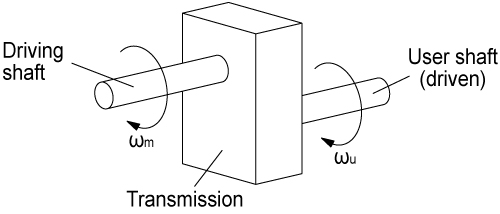
A mechanical transmission is constituted by the complex of the elements required to transmit power in a mechanical system, thus transferring energy from an engine to a user for a certain period of time:

![]()
The transfer of this power from the engine to the transmission takes place generally via the driving shaft. A user shaft (also called driven shaft) allows instead the transfer of this power from the transmission to the user.
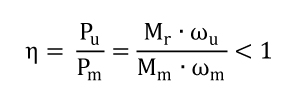
The power that reaches the user can never be equal to the one coming out of the engine. In fact, during transmission, part of this power will be dissipated by friction or heat. To evaluate how much power is actually used compared to the one generated, then an efficiency value (η) is used:
where:
- Driving Power (Pm)= Useful Power (Pu) + Dissipated Power (Pd)
- Mm and Mr are, respectively, the driving torque and the resistant torque.
- ωm and ωu are, respectively, the angular speed of the driving shaft and that of the user shaft.
The driving power is generally expressed as:

Where nm is the number of rounds of the driving shaft expressed in revolutions per minute (rpm) and 9.55 is instead the conversion factor for transforming radians per second in rpm.
The characteristic parameter of the transmission is the transmission ratio (τ), the ratio between the angular speed of the driving shaft and that of the driven shaft:


-
General
-
1. Materiales plásticos
- 1.1 Resitencia mecánica
- 1.2 Resistencia térmica
- 1.3 Resistencia y dureza superficial
- 1.4 Resistencia a los agentes químicos
- 1.5 Resistencia a los agentes atmosféricos y rayos uv
- 1.6 Resistencia a la llama
- 1.7 Propiedades eléctricas
- 1.8 Acabado superficial y lavado
- 1.9 Cumplimiento de las normas internacionales
- 1.10 Competencia del departamento técnico de elesa
- 2. Materiales metálicos
- 3. Otros materiales
- 4. Tolerancias de mecanizado
- 5. Empuñaduras fijas
- 6. Precauciones para el montaje
- 7. Ejecuciones especiales
- 8. Colores
- 9. Valores de las pruebas
-
10. Tablas técnicas
- 10.1 Tablas de conversión
- 10.2 Agujeros cuadrados y ejes din 79
- 10.3 Chaveteros
- 10.4 Agujeros transversales
- 10.5 Roscados
- 10.6 Ip – clasificación de protección ip para carcasas
- 10.7 Mvk – fijación de los roscados mediante autopegado
- 10.8 Pfb – fijación de los roscados mediante acción de bloqueo
- 10.9 Aceros inoxidables
- 10.10 Aceros al carbono, aleaciones de cinc, aluminio y latón
- 10.11 Duroplastos: resistencia a agentes químicos

- 10.12 Tecnopolímeros y goma: resistencia a agentes químicos
-
1. Materiales plásticos
- Palancas ajustables
- Asa con acción neumática
- Graduaciones
- Controles giratorios
- Unidades de transferencia
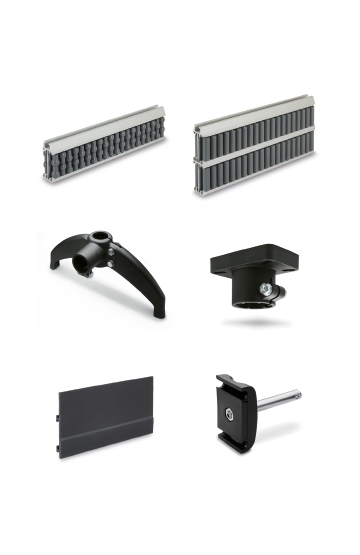
- Rieles con rodillos modulares
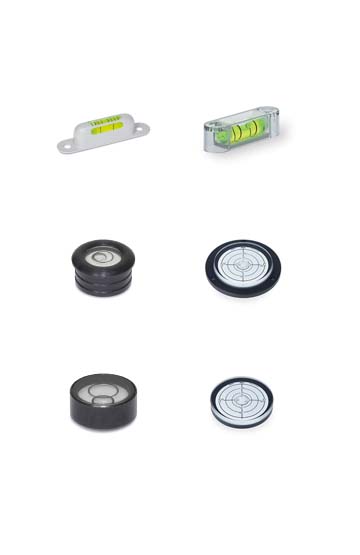
- Niveles de burbuja
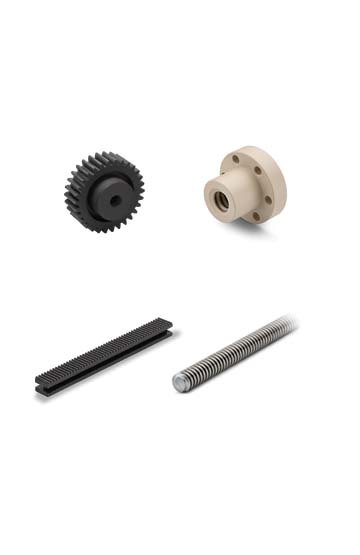
- Engranes dentados
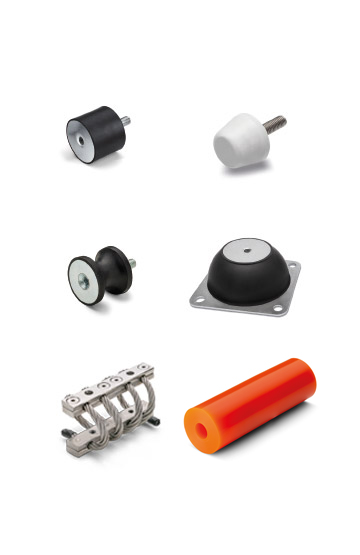
- Antivibrador de goma
- Amortiguadores de vibraciones de alto rendimiento
- Muelles de poliuretano
- Imanes
- Elementos de nivelación
- Diseño higiénico
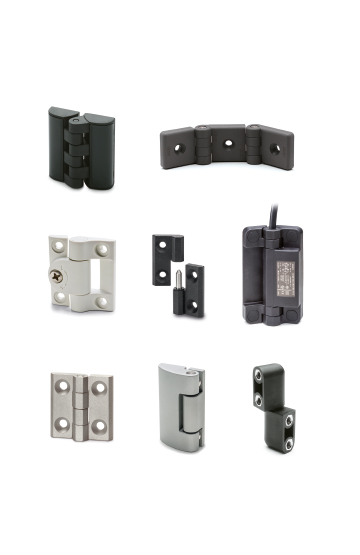
- Bisagras
- Abrazaderas neumáticas
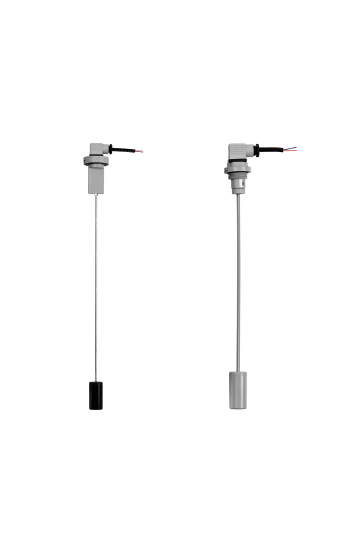
- Indicadores de nivel eléctrico
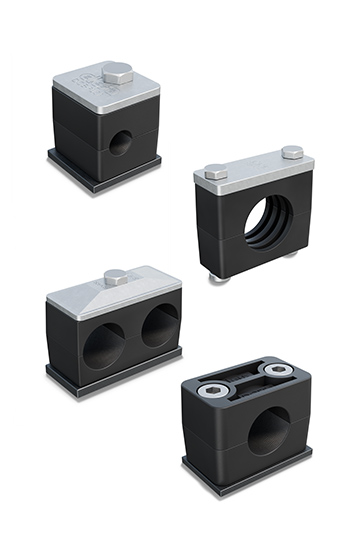
- Abrazaderas de tubo din 3015
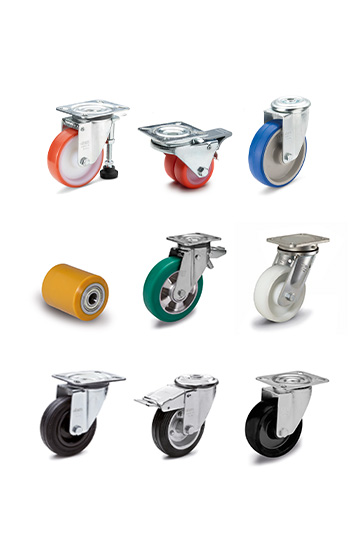
- Ruedas y rodajas
- Componentes para el vacío