
5.1 Naturaleza y estado del suelo
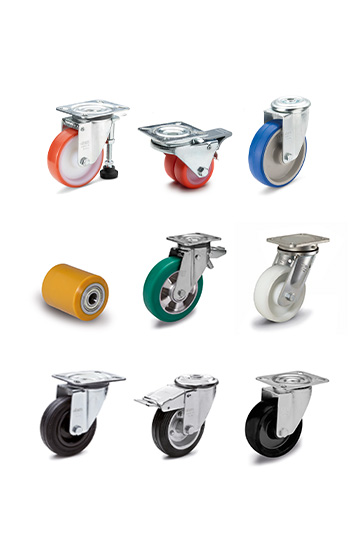
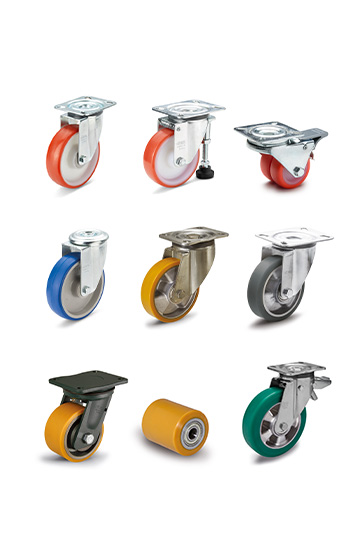
The nature and condition of the ground and the presence of any obstacles will havean influence on choosing the right wheel. They are also important factors affecting the performance of the moving equipment as well as the efficiency and the duration of the wheels and castors.
Special attention is required for cases involving uneven floors or where obstacles are present. In this case, the impact of the wheel against an obstacle generates advancement resistance whose magnitude depends on the elasticity of the rolling strip material. In fact, the energy absorbed during an impact is greater in a wheel with an elastic rolling strip than in a rigid wheel, thus partially cancelling the braking effects caused by the obstacle.
For floors that are uneven or on which obstacles are present, with load capacity being equal, a wheel with a greater diameter should be chosen in order to overcome the obstacle.
The wheel must be chosen very carefully in all cases in which there are obstacles, chemical and/or organic substances and machining residues. The main types of flooring are:
- tiles;
- asphalt;
- cement-resin;
- not paved floor;
- expanded metal floor;
- floor with chips, obstacles etc.
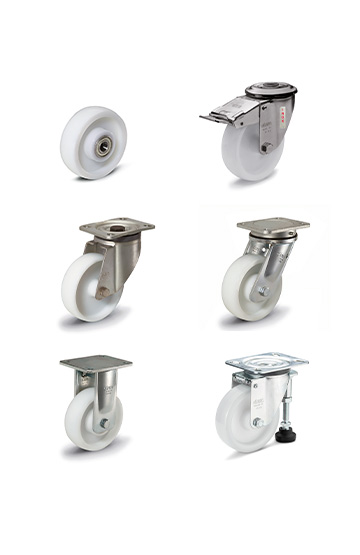
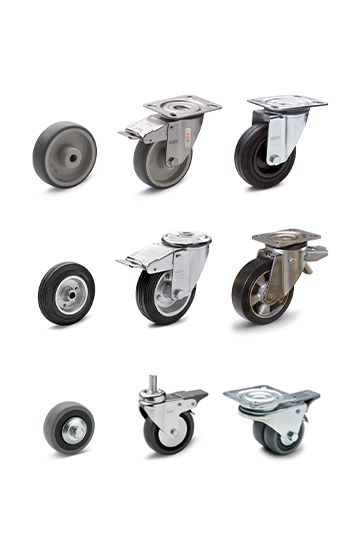
The main floor-wheel covering combinations are listed in the following table.

-
General
-
1. Materiales plásticos

- 1.1 Resitencia mecánica
- 1.2 Resistencia térmica
- 1.3 Resistencia y dureza superficial
- 1.4 Resistencia a los agentes químicos
- 1.5 Resistencia a los agentes atmosféricos y rayos uv
- 1.6 Resistencia a la llama
- 1.7 Propiedades eléctricas
- 1.8 Acabado superficial y lavado
- 1.9 Cumplimiento de las normas internacionales
- 1.10 Competencia del departamento técnico de elesa
- 2. Materiales metálicos
- 3. Otros materiales
- 4. Tolerancias de mecanizado
- 5. Empuñaduras fijas
- 6. Precauciones para el montaje
- 7. Ejecuciones especiales
- 8. Colores
- 9. Valores de las pruebas
-
10. Tablas técnicas
- 10.1 Tablas de conversión
- 10.2 Agujeros cuadrados y ejes din 79
- 10.3 Chaveteros
- 10.4 Agujeros transversales
- 10.5 Roscados
- 10.6 Ip – clasificación de protección ip para carcasas
- 10.7 Mvk – fijación de los roscados mediante autopegado
- 10.8 Pfb – fijación de los roscados mediante acción de bloqueo
- 10.9 Aceros inoxidables
- 10.10 Aceros al carbono, aleaciones de cinc, aluminio y latón
- 10.11 Duroplastos: resistencia a agentes químicos
- 10.12 Tecnopolímeros y goma: resistencia a agentes químicos
-
1. Materiales plásticos
- Palancas ajustables
- Asa con acción neumática
- Graduaciones
- Controles giratorios
- Unidades de transferencia
- Rieles con rodillos modulares
- Niveles de burbuja
- Engranes dentados
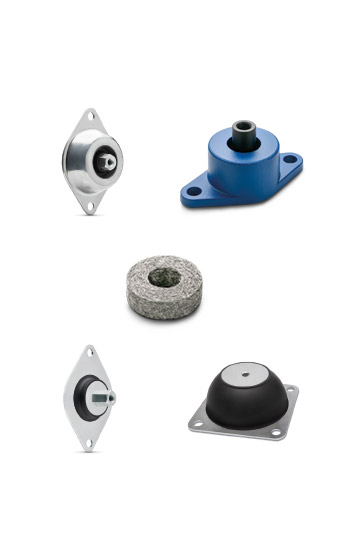
- Antivibrador de goma
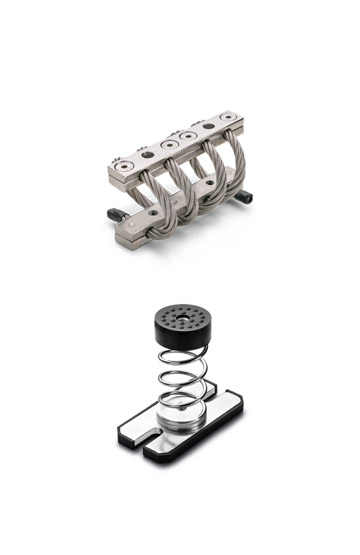
- Amortiguadores de vibraciones de alto rendimiento
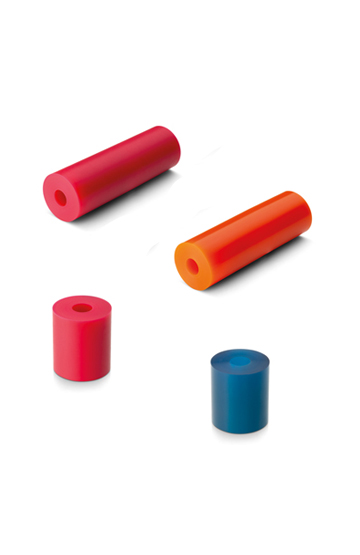
- Muelles de poliuretano
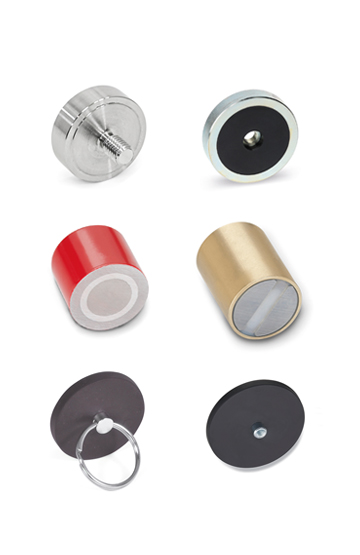
- Imanes
- Elementos de nivelación
- Diseño higiénico
- Bisagras
- Abrazaderas neumáticas
- Indicadores de nivel eléctrico
- Abrazaderas de tubo din 3015
- Ruedas y rodajas
- Componentes para el vacío