

San - Antimicrobial
Close
Apr 14, 2026
Reading time: minutes
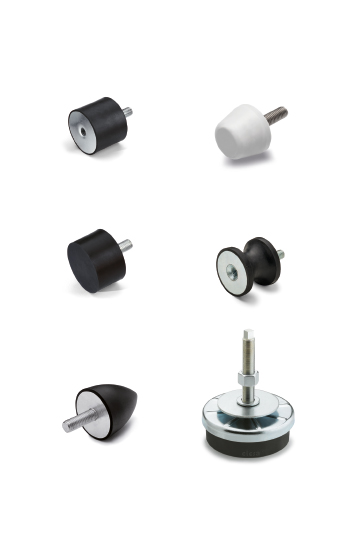
The adjustable foot is among the most frequently underspecified components in UK industrial equipment design. As manufacturing processes become more sophisticated and the environments in which equipment operates grow more varied, the demands placed upon this apparently straightforward product have widened considerably. The result is a category that now spans a substantial range of engineering solutions, each developed to address particular operational conditions with a degree of precision that procurement teams and design engineers would do well to understand before reaching a specification decision.
At its most fundamental, the adjustable foot serves to compensate for floor surface irregularities and to provide a stable mechanical interface between machine frame and ground. Both functions carry consequences that extend well beyond the immediate installation. An unlevel machine tool introduces tolerance errors into its output. An unlevel processing line creates flow problems, accelerates wear on conveyor components, and generates potential safety concerns for operatives. An unlevel workstation produces ergonomic difficulties over sustained periods of use. Correctly specified and properly installed, the adjustable foot addresses all of these conditions economically and without recourse to structural modification of the building or machine frame.
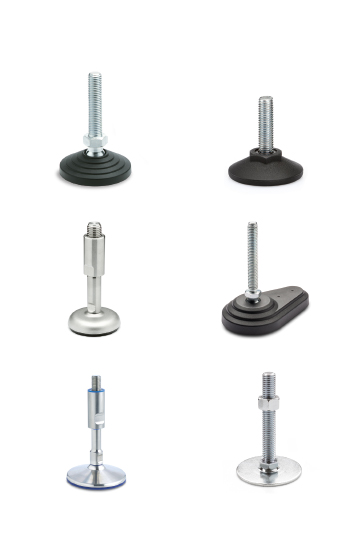
The UK market for adjustable feet spans a number of clearly defined application sectors. In general manufacturing and light fabrication, the requirement is typically for reliable adjustment over a practical height range, with sufficient load capacity for the equipment in question. Units in this category are well served by steel-bodied construction with thermoplastic or rubber base pads, offering the combination of durability and floor protection that workshop environments demand. Where aesthetics are also a consideration, such as in showroom displays, retail installations, or office-based equipment, technopolymer units in a range of colours and finishes provide an appropriate alternative without sacrifice of functional performance.
For applications involving equipment that is repositioned regularly, the selection of a foot with a considered locking mechanism is an important but frequently overlooked criterion. A foot that allows height adjustment to be fixed securely once set, without risk of gradual loosening under vibration or load cycling, reduces maintenance intervention and ensures that the benefits of accurate initial levelling are preserved over the working life of the installation. This is of particular relevance in production environments where equipment is periodically relocated for cleaning, reconfiguration, or maintenance access.
The question of floor surface compatibility deserves greater attention than it typically receives at the specification stage. In facilities with smooth, sealed, or wet floors, the underside material of the adjustable foot has a direct bearing on both grip and floor protection. Rubber base pads offer good friction characteristics across a wide range of floor types, whilst polyamide or technopolymer bases are preferred where chemical resistance or reduced marking of finished floor surfaces is a priority. Where fixing to the floor is required, whether to prevent movement during operation or to satisfy statutory requirements under machinery safety regulations, feet with integral floor-fixing bolt provisions are available to meet this need across a range of load ratings.
A growing area of focus within the UK adjustable feet market is the specification of products with documented material compliance. Buyers in the automotive, aerospace, electronics, and defence supply chains are increasingly required to demonstrate that all constituent components of their equipment, including standard parts such as adjustable feet, are manufactured from materials that meet defined compositional standards. FDA and EU compliance documentation for plastic components, REACH and RoHS declarations, and material traceability records are becoming standard requests during procurement processes in these sectors. Suppliers who are able to provide this documentation without bespoke qualification exercises offer a clear advantage in terms of time-to-production and audit readiness.
In cleanroom and controlled environment applications, the choice of adjustable foot material and surface finish takes on additional significance. Smooth, non-porous surfaces that do not generate particulates and can be wiped down with isopropyl alcohol or other standard cleanroom-compatible agents are essential requirements. Stainless steel or high-grade technopolymer units without exposed fasteners or recessed features that could trap contaminants are the appropriate solution in these environments, and their specification from the outset avoids the cost and disruption of remedial component changes following validation.
The breadth of the adjustable feet category available to UK specifiers reflects the genuine diversity of the applications it serves. From compact moulded units for light equipment through to heavy-duty steel and technopolymer assemblies for industrial machinery, and from standard painted finishes for general use through to fully documented stainless steel units for controlled environments, the range available from Elesa for the UK market provides a coherent and well-engineered response to this full spectrum of need.