
San - Antimicrobial
Close



78711-R,20
78710-R,10
78712-R,50
Jul 6, 2026
Author: Alvin Wilhelm
Reading time: minutes
Not all equipment damage comes from major impacts. In many applications, it's the smaller, repeated forces-vibrations, micro-shocks, and constant oscillations-that gradually affect performance over time.
These forces can reduce positioning accuracy, contribute to premature component fatigue, increase noise, and shorten equipment lifespan. Left uncontrolled, vibration can also affect product quality, creating inconsistencies that may not be immediately obvious but become more significant as systems continue to operate.
Whether it's an automated production cell or a piece of equipment at home, controlling vibration is often essential to maintaining precision, reliability, and long-term performance.
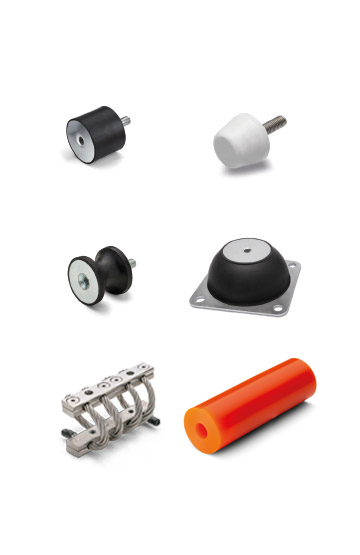
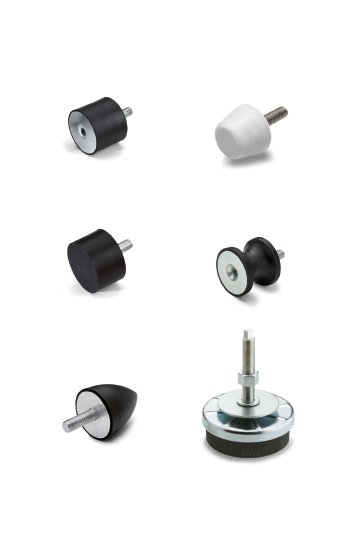
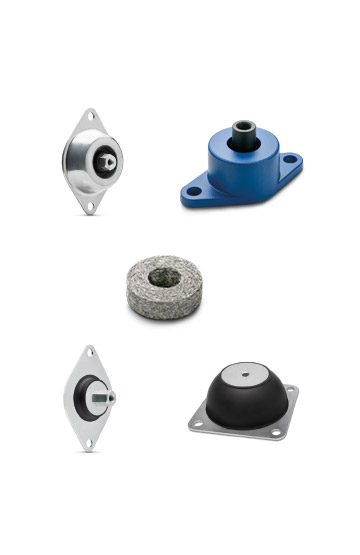
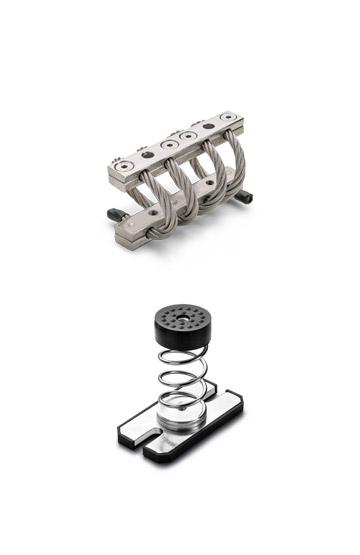
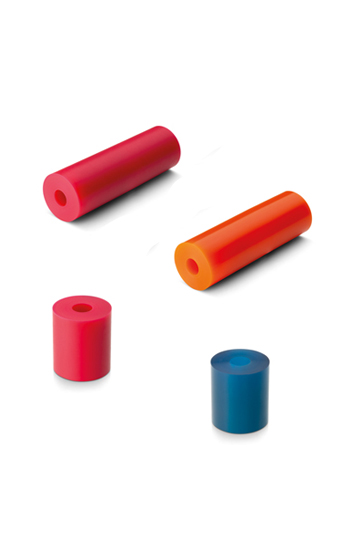
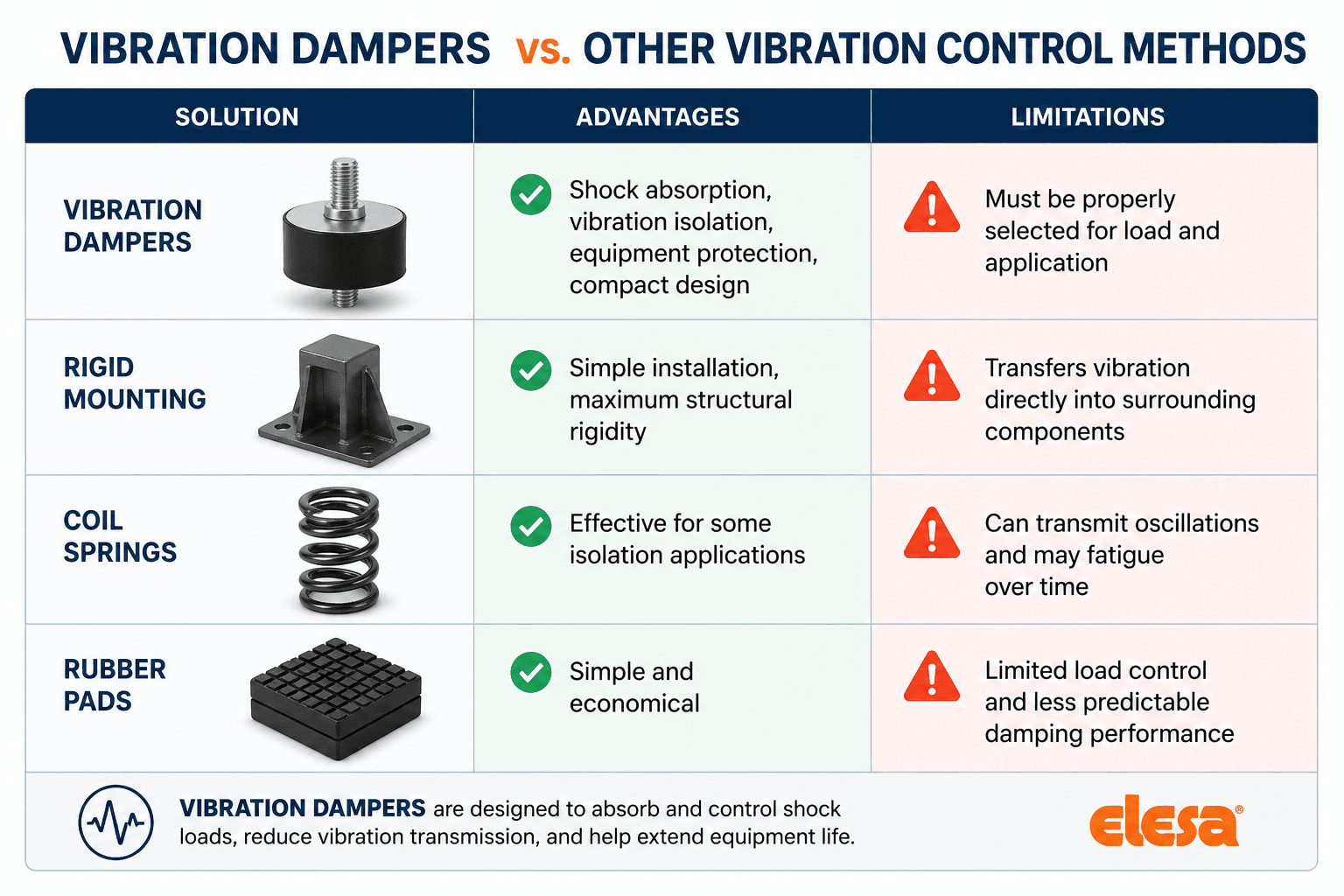
Vibration dampers, damping elements, and buffers are components designed to absorb, isolate, and control unwanted energy within a system. Rather than allowing shock loads and vibration to travel through equipment, these components help dissipate that energy before it can affect surrounding structures.
Elesa vibration dampers are commonly used to:
By controlling unwanted movement, vibration dampers help create smoother, more stable operation across a wide range of applications.
The principle behind a vibration damper is straightforward. When shock loads or vibration occur, the damping material absorbs and dissipates a portion of that energy rather than allowing it to pass directly through the structure.
This helps:
Many Elesa damping elements utilize advanced elastomer and polyurethane materials engineered to provide reliable energy absorption while maintaining durability over extended service life.
The result is smoother operation and reduced stress throughout the system.
In automated manufacturing environments, precision is everything. Consider a palletizing cobot that repeatedly places products throughout a shift. Even small impacts between the gripper and product can introduce shock loads into the robotic arm. Over time, those repeated forces may affect positional repeatability and stacking accuracy.
By incorporating polyurethane damping elements between the gripper plate and the arm, impact energy can be absorbed before it reaches critical components. This helps maintain accuracy, improve consistency, and reduce wear on the robotic system.
The same concept applies in everyday applications. A desktop 3D printer may appear stable, but small vibrations can translate directly into visible defects on printed parts. Surface ripples, reduced detail quality, and inconsistent layer finishes are often symptoms of vibration transfer. Installing compact threaded vibration dampers can help isolate the printer from surrounding movement, improving stability and restoring the fine-detail performance users expect.
Carefully matching the damping element to the application helps maximize equipment performance and service life.
Not every application experiences vibration in the same way, which is why selecting the right vibration damper starts with understanding the operating environment. Factors such as the weight being supported, the type and frequency of vibration, and the severity of any impact loads all influence how a damping element will perform.
Environmental conditions also play an important role. Exposure to moisture, oils, chemicals, or temperature fluctuations can affect material selection, while available installation space may determine the size and configuration that can be used. Ultimately, the goal is to find a solution that provides the right level of vibration isolation without compromising overall system performance.
By matching the damping element to the specific demands of the application, designers can improve equipment stability, protect sensitive components, and help extend service life.
Looking to reduce vibration, improve positioning accuracy, and protect critical equipment from repeated shock loads? Elesa vibration dampers, damping elements, and buffers are designed to absorb unwanted energy while supporting smooth, reliable operation. Whether you're optimizing automated machinery or improving the performance of precision equipment, you'll find solutions engineered for durability, functional design, and long-term reliability. Explore the Elesa website to find the right solution for your project.

Sign up to receive the latest information on ELESA products and services.