

San - Antimicrobial
Sulje



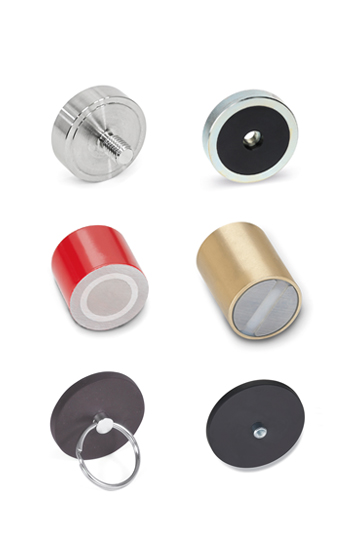
| Magnetic materials | |
 | Hard ferrite (HF) Hard ferrite Magnets (80% iron oxide) are made out by a sintering process. Like all ceramic materials, these magnets are very hard, brittle and virtually non-machinable. The magnetic adhesive force drops when the magnet is heated. |
 | AlNiCo (AN) Aluminium nickel cobalt AlNiCo magnets (mainly made out of aluminium, nickel, cobalt and iron) are the result of a sintering process or a casting process. These magnets are very hard and their material is very tough, but they can undergo also some machining processes. These magnets are generally used for applications in which the magnetic fi eld must remain as much static and stable as possible, even at high temperatures. |
 | SmCo (SC) Samarium cobalt SmCo magnets (mainly made out of samarium and cobalt) are the result of a sintering process. These magnets are very hard, brittle and virtually non-machinable. The magnetic adhesive force drops when the magnet is heated. |
 | NdFeB (ND) Neodymium iron boron NdFeB magnets (mainly made out of neodymium, iron and boron) are the result of a sintering process. These magnets are very hard, brittle and virtually non-machinable. The magnets made out of this material convey their maximum long-lasting magnetic power. The magnetic adhesive force drops when the magnet is heated. |
| Material | Hard ferrite (HF) | AlNiCo (AN) | SmCo (SC) | NdFeB (ND) |
| Adhesive force | good | medium | strong | very strong |
| Max. working temperature * | ≈ 200°C | ≈ 450°C | ≈ 200°C | ≈ 80°C |
| Corrosion resistance | very good | very good | good | less good |
| Machinability | not possible | diamond cutting, grinding | not possible | not possible |
| Demagnetisation capability | moderate
by demagnetising field | easy
by demagnetisign field | very difficult
only by large demagnetising fields | difficult
only by large demagnetising fields |
| Price | molto ragionevole | alto | molto alto | ragionevole |
* The max. working temperature has to be kept only as a guide value because it also depends on the magnet dimensions.