


















San - Antimicrobial
Sulje



The magnitude of the load is the value [N] obtained by adding the weight to be transported to the equipment weight (tare). The nature of the load, either a liquid or a solid, has a significant effect on the wheel load capacity calculation. The formula to determine the load capacity for each wheel is:
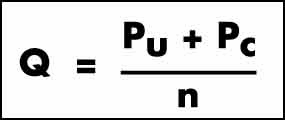
where: Q = load capacity for each wheel Pu = weight to transport Pc = equipment tare (equipment weight) n = number of wheels in contact with the ground
SOLID LOAD.
For a solid load, n=3 for a four-wheeled equipment (where three out of four wheels are considered to be in contact with the ground at all times).
LIQUID LOAD.
For a liquid load n=2 for a four-wheeled equipment (where two out of four wheels are considered to be alternatively in contact with the ground).
A thorough analysis is indispensable when the equipment is part of an automated or continuous cycle production unit. In this case, all the forces that act on the wheel must be taken into consideration; therefore, it is recommended to include allowances and safety factors.