
San - Antimicrobial
Close



78711-R,20
78710-R,10
78712-R,50
Jan 16, 2026
Author: Daniel Hodson
Reading time: minutes
A UK-based manufacturer produces low-to-medium volume components in steel, aluminium, and engineering plastics. Parts are machined, drilled, welded, and assembled across several manual and semi-automated workstations. Most fixtures rely on traditional screw clamps and improvised fastening methods. While functional, these setups introduce variation in clamping force, longer setup times, and operator fatigue during repetitive tasks.
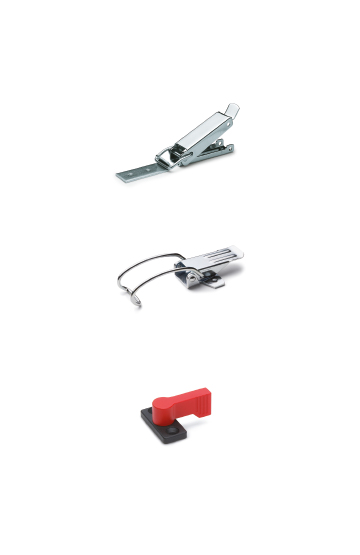
As production volumes increase, the company looks for a more consistent and repeatable workholding solution. Toggle clamps are selected due to their mechanical advantage, fast operation, and suitability for repeated cycles. The evaluation focuses on standard, off-the-shelf clamps from Elesa, rather than custom fixtures, to keep costs and lead times under control.
Why Toggle Clamps Were Introduced
Toggle clamps use a linkage mechanism that multiplies the force applied by the operator. Once the linkage passes its centre point, the clamp locks mechanically. This over-centre action means the clamp remains closed without continuous force. In practice, this gives a predictable and repeatable holding force every cycle.
In the existing setup, operators tighten screw clamps by feel. This causes inconsistency. Some parts move during drilling. Others are over-clamped and marked. Toggle clamps remove this variability. The operator moves the handle to a fixed stop. The force applied is the same each time.
Another driver is speed. On stations where parts are loaded and unloaded hundreds of times per shift, even a few seconds saved per cycle has a noticeable impact. Toggle clamps allow one-handed operation and quick release, reducing handling time without sacrificing security.
Selection and Application on the Line
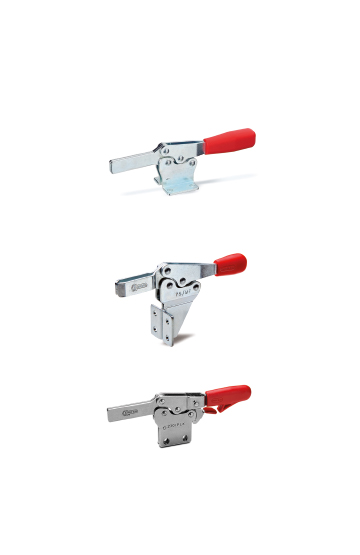
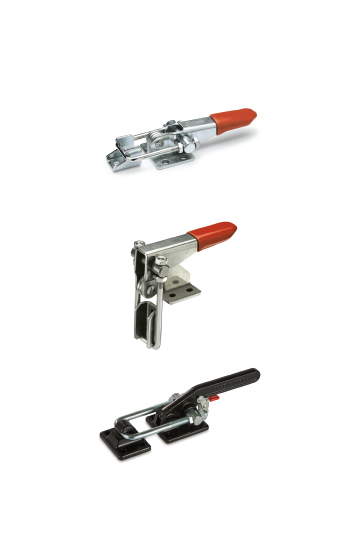
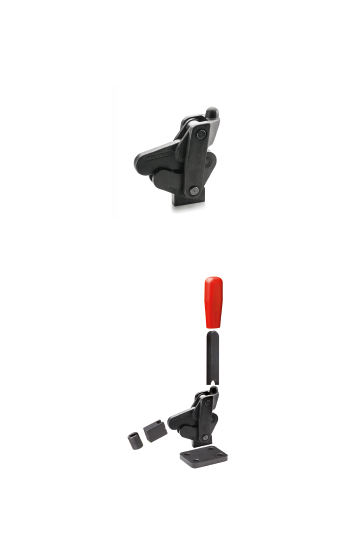
The first area addressed is a machining fixture used for drilling aluminium plates. Space above the workpiece is limited due to tool clearance. Horizontal toggle clamps are chosen because they apply force parallel to the baseplate while pulling the part down against a fixed stop. The clamp arm length and spindle adjustment are set so the clamp reaches full lock just past centre, ensuring secure holding without excessive force.
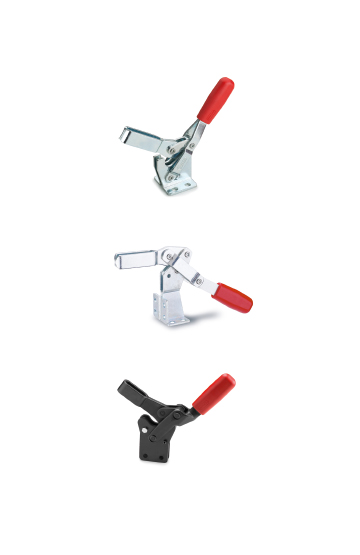
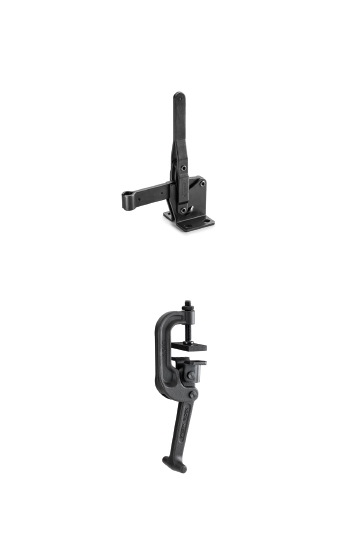
For welding jigs, vertical toggle clamps are introduced. These apply downward force directly onto the component, holding it flat against the fixture during tack welding. Vertical clamps are preferred here because they are easy to visually inspect. Operators can clearly see when the clamp is fully engaged, which is important in a safety-critical environment like welding.
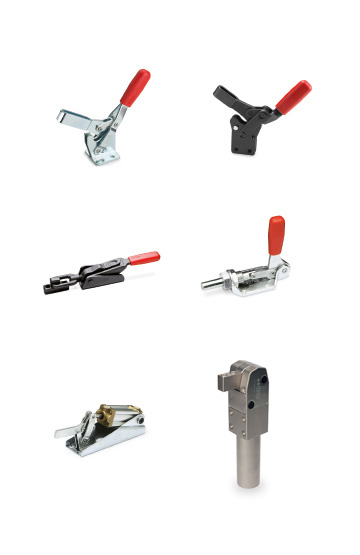
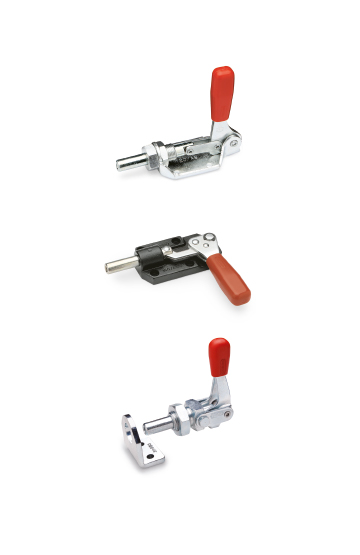
In a separate assembly area, push-pull toggle clamps are used. These provide linear motion rather than a swinging arm. They are mounted in line with the part and used to locate components against a datum face during fastening. This setup reduces part movement and improves positional accuracy without adding complexity to the fixture.
Across all stations, clamp selection follows the same principles. Holding force is chosen based on the operation and material. Aluminium parts require less force than steel. Plastic parts require enough force to prevent movement without deformation. Mounting footprint and handle clearance are checked to ensure operators can work comfortably without awkward hand positions.
Material choice also plays a role. In areas exposed to coolant and welding residue, zinc-plated steel and stainless-steel clamps are used to reduce corrosion and extend service life. Polymer handles improve grip and remain comfortable during long shifts.
Results in Use
Once installed, the impact is immediate. Setup times drop because clamps do not need manual adjustment for every part. Scrap caused by part movement during machining is reduced. Weld quality improves due to better repeatability in part positioning.
Operators report less hand fatigue and fewer interruptions to retighten fixtures. Maintenance requirements are low. The mechanical simplicity of toggle clamps means there are few wear points, even in high-cycle use.
From a cost perspective, the company avoids custom fixture redesign. Standard toggle clamps are mounted to existing plates with minimal modification. This keeps downtime low and allows fixtures to be updated incrementally rather than all at once.
Practical Takeaway
This case shows why toggle clamps remain a core workholding solution in manufacturing. Their value is not just in holding force, but in repeatability, speed, and operator confidence. When selected with the correct force rating, orientation, and mounting position, they offer a simple way to improve process stability without adding automation or complexity.
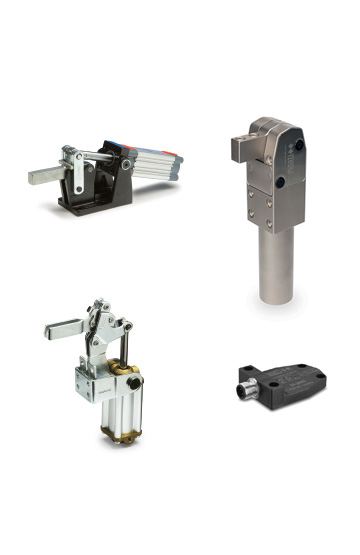
Elesa’s toggle clamp range covers these use cases well, from compact horizontal models to heavier-duty vertical and push-pull designs. For manufacturers balancing flexibility with consistency, toggle clamps provide a reliable foundation for modern fixtures.

For the latest information on Elesa products and services