

San - Antimicrobial
Close
Feb 16, 2026
Reading time: minutes
Toggle latches are widely recognised for their strength, reliability, and ease of use in industrial applications. Although they are only one type of latch, their distinctive over-centre mechanism gives them performance advantages that make them a preferred solution in environments subject to vibration, repeated use, and mechanical stress.
Understanding how toggle latches operate and why they are chosen over other latch types helps engineers and buyers specify the most effective solution for their equipment.
What defines a toggle latch
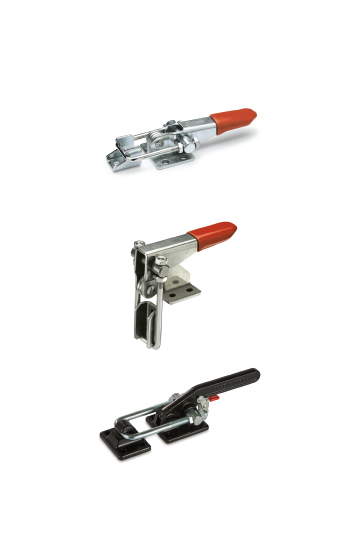
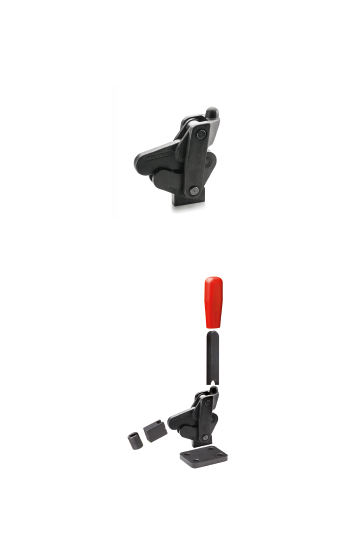
A toggle latch is characterised by its over-centre action. As the latch is closed, the operating lever moves past a central point in the mechanism. Once this point is crossed, the forces acting on the latch naturally keep it closed rather than pushing it open. This principle provides a secure closure that remains stable even when subjected to vibration or movement.
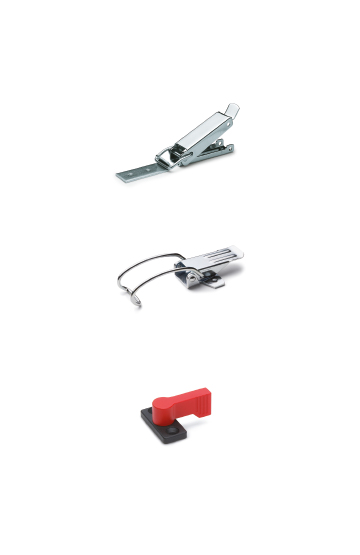
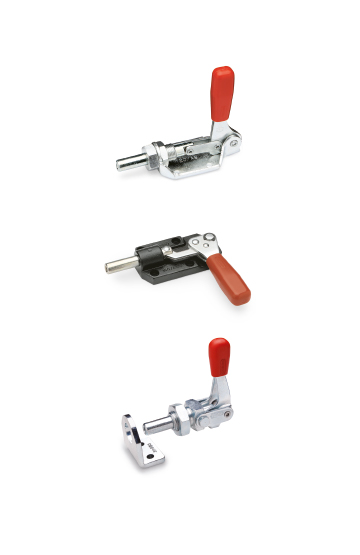
Most toggle latches consist of a lever body, a hook or draw arm and a fixed catch. When engaged, the hook pulls the mating surface tightly into position, generating a strong and repeatable clamping force.
Why the over-centre mechanism matters
The over-centre design is what sets toggle latches apart from many other industrial latches. Because the mechanism locks into place mechanically, it resists loosening under vibration and does not rely solely on friction or spring tension. This makes toggle latches especially suitable for mobile equipment, machinery and enclosures that experience constant movement.
The mechanical advantage of the lever also allows a high clamping force to be achieved with minimal operator effort. This combination of strength and ease of use is a key reason toggle latches are so widely used in industrial settings.
Variations of toggle latches
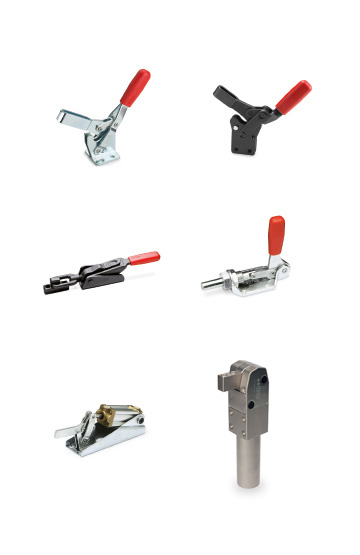
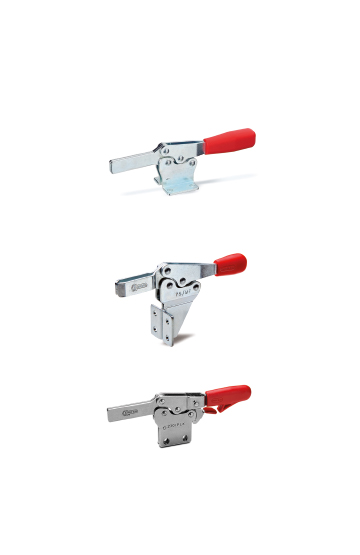
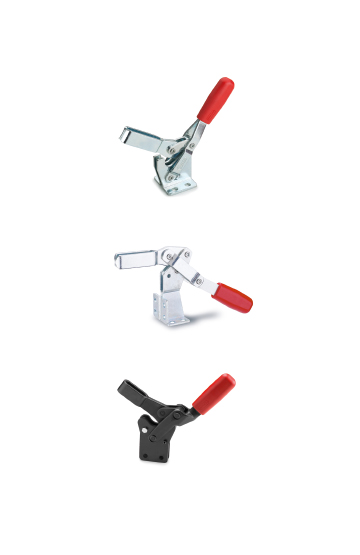
Toggle latches are available in a range of configurations to suit different requirements. Standard toggle latches provide straightforward over-centre clamping and are commonly used on machine covers and industrial enclosures. Spring-loaded versions incorporate internal springs that help maintain tension over time and compensate for vibration or wear, improving long-term consistency.
In safety-critical applications, locking or safety toggle latches may be specified. These designs include secondary locking features that prevent accidental opening, making them suitable for guards or access panels where unintended release could pose a risk. Heavy-duty toggle latches are designed for higher loads, using reinforced components and thicker materials to deliver increased strength.
Materials and environmental considerations
As with other industrial latches, material choice is a key factor in toggle latch performance. Steel toggle latches offer high strength and are commonly used in general industrial environments. Zinc-plated finishes provide additional protection against corrosion in indoor applications.
Stainless steel toggle latches are preferred in more demanding environments. Their corrosion resistance makes them suitable for outdoor use, washdown areas and hygienic industries. In food processing and pharmaceutical equipment, stainless steel toggle latches are often essential to meet cleanliness and regulatory requirements.
Advantages over other latch mechanisms
Toggle latches offer several advantages that explain their popularity. Their resistance to vibration makes them more reliable than many alternative latch types in dynamic environments. The consistent clamping force they provide improves sealing, reduces noise, and prevents gradual loosening over time.
Ease of operation is another key benefit. Toggle latches allow panels and doors to be opened and closed quickly without tools, supporting efficient maintenance and inspection routines. Adjustable hook lengths in many designs allow installers to fine-tune the closure force, ensuring a precise fit.
Typical industrial applications
Toggle latches are widely used on machinery covers, industrial enclosures and transport equipment. In electrical cabinets, they help keep doors securely closed despite vibration. On mobile equipment and cases, they provide a robust closure that withstands repeated handling and movement.
In hygienic environments, stainless steel toggle latches support frequent cleaning while maintaining reliable operation. Across these applications, their durability and ease of use contribute to improved safety and reduced downtime.
Choosing the right toggle latch
Selecting the correct toggle latch involves assessing the required holding force, available mounting space and environmental exposure. Safety considerations may also influence whether locking or secondary retention features are needed. By matching these factors to the appropriate latch design and material, long-term performance and reliability can be achieved.
Toggle latches in the wider latch landscape
While toggle latches offer exceptional performance, they are not always the most appropriate choice. Light-duty access panels or sealed enclosures may be better served by compression or quarter-turn latches. Understanding the strengths of each latch type ensures the right balance between performance, cost, and usability.