

San - Antimicrobial
Close
Apr 2, 2026
Reading time: minutes
It is a truth often overlooked in engineering circles that the performance of even the most sophisticated industrial machinery is ultimately dependent upon what sits beneath it. Levelling feet, those workmanlike components at the base of countless machines, workbenches, and processing lines across the United Kingdom, exert an influence on operational efficiency, operator safety, and equipment longevity that is rarely proportionate to the attention they receive at the specification stage.
The UK industrial market encompasses an extraordinarily broad range of applications, from light instrumentation and laboratory benching through to transfer machinery, food processing plants, and heavy pressing equipment. No single levelling foot design is equal to this diversity of demand, and the most significant advance in thinking within the sector has been the recognition that material selection, base geometry, and vibration characteristics must be considered together as a system, rather than as incidental features of a commodity component.
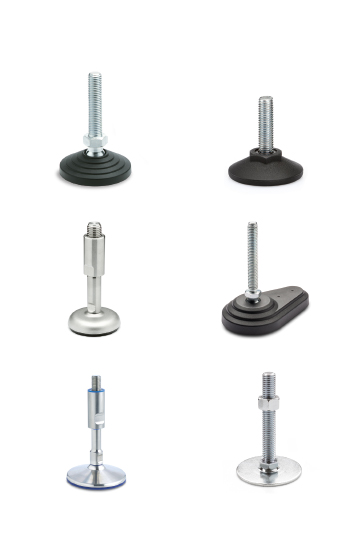
At the lighter end of the application spectrum, moulded-in adjustment provides a compact and cost-effective solution suited to instrumentation housings, portable display stands, and bench-top equipment. The Elesa LX series exemplifies this approach, offering straightforward height adjustment without the need for separate locking hardware, making it well suited to environments where repositioning is frequent and downtime must be minimised.
Where applications become more demanding, particularly where stability against shock or lateral movement is required, the geometry of the foot base assumes greater importance. Levelling feet with profiled or extended bases offer significantly improved resistance to movement, and where a permanent or semi-permanent installation is required, floor-fixing provisions become essential. The addition of NBR rubber non-slip discs to the underside of such units provides a further degree of anchoring, ensuring that even under shock loading, the equipment remains correctly positioned. This is of particular value in manufacturing environments where machine drift, however small, can compromise product quality or create safety hazards.
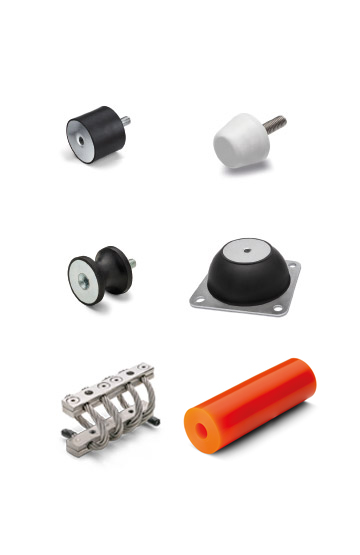
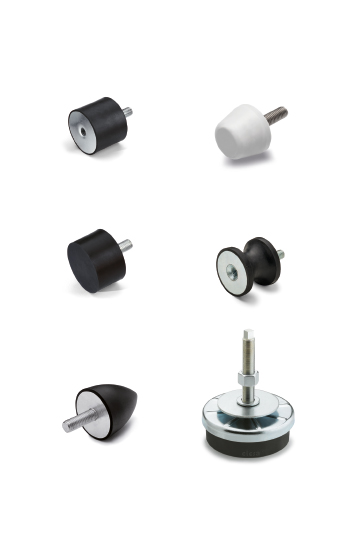
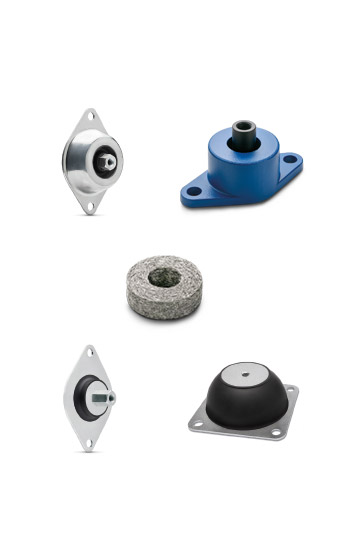
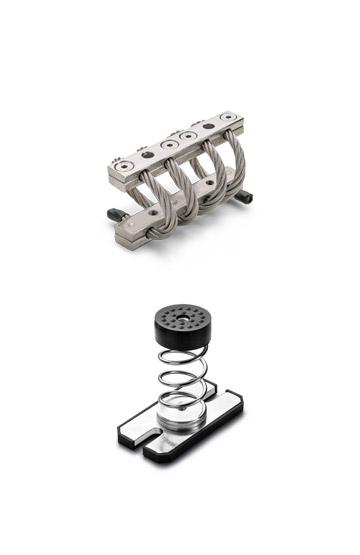
Vibration management represents perhaps the most technically nuanced area of levelling foot selection, and it is here that a well-engineered product makes its value most clearly felt. The consequences of unmanaged vibration in industrial settings are well documented: accelerated mechanical wear, elevated noise levels, reduced precision in adjacent measuring or testing equipment, and negative effects on the health of operators working in proximity to vibrating machinery. Levelling elements incorporating natural rubber damping pads, such as the Elesa LW.A series, addresses this challenge in a manner that is genuinely bi-directional. They are equally effective in an active role, isolating vibration produced by presses or rotating machinery from the surrounding structure, and in a passive role, protecting sensitive equipment such as quality testing apparatus from externally generated vibration. This dual functionality is of considerable practical value in modern production facilities, where precision measurement equipment frequently operates in close proximity to heavy process machinery.
The food processing and pharmaceutical industries present a further, distinct set of requirements. Here the primary concerns are resistance to aggressive cleaning agents, elimination of harbourage points for bacteria, and compliance with hygienic design standards that are increasingly mandated by both legislative frameworks and customer audit requirements. Stainless steel levelling feet manufactured from AISI 303 or 304 grade material, with convex bases designed to shed liquids downward and sleeved threads that prevent ingress of process residues, represent the appropriate engineering response. The significance of low sulphur content in the material specification, and the deliberate elimination of sharp edges and corners, should not be underestimated in environments subject to high-pressure washdown.
Elesa's LM.F-HD-SST series, holding EHEDG certification, exemplifies the direction in which this sector is moving. The European Hygienic Engineering and Design Group standard provides an independently verified assurance of hygienic performance, and its adoption by specifiers within food production, pharmaceutical, and paint manufacturing is increasing accordingly. The practical benefits are quantifiable: reductions in washdown cycle times of up to 25% have been demonstrated, with corresponding savings in water, energy, and cleaning agent consumption. In a regulatory and commercial environment where operational efficiency and compliance are both under sustained scrutiny, the selection of certified hygienic components at the design stage represents a straightforward and demonstrable gain.
The levelling foot, in summary, is not a specification afterthought. It is a component whose correct selection, matched to load, environment, floor condition, vibration profile, and hygiene requirement, contributes materially to the performance, longevity, and compliance of the equipment it supports.