
San - Antimicrobial
Close



78711-R,20
78710-R,10
78712-R,50
Dec 4, 2025
Author: Francesca Costa
Reading time: minutes
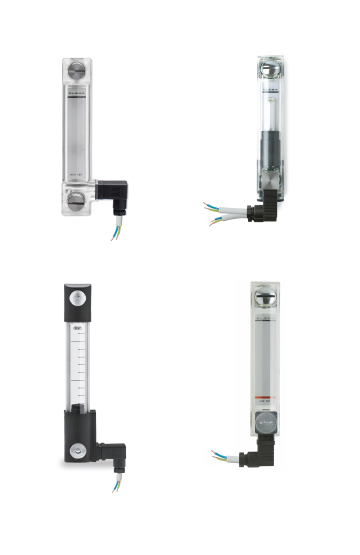
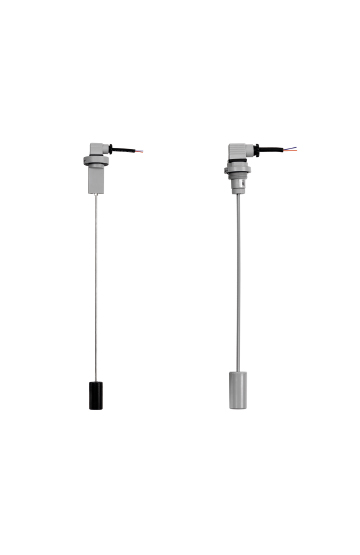
Reliable liquid detection is an essential requirement in many industrial sectors, including plant engineering. To meet these needs, Elesa introduced two new products: the HSC capacitive level sensor, suitable for conductive liquids such as water and non-conducting liquids such as oil or diesel, and the HSO optical level sensor, ideal for translucent liquids. Both ensure accuracy and robustness, yet differ in their operating principles and application fields.
HSC | CAPACITATIVE LEVEL SENSOR
The HSC model, based on capacitive technology, uses a conductive electrode coated in PTFE, inserted directly into the tank or container where the liquid level must be detected. Its operating principle relies on the variation of electrical capacitance generated inside the tank. The probe and the surrounding metal walls form a capacitor whose capacitance changes according to the liquid level.
As the fluid level rises, the probe’s electrical capacitance increases accordingly, enabling precise detection. In practice, capacitance is low when the tank is empty and high when it is full.
This solution is versatile. It is suitable for conductive fluids such as water (W version) and for oils and diesel fuel (O version). The maximum operating temperature ranges from –30 to +125 °C, while pressure resistance reaches 50 bar.
HSO | OPTICAL LEVEL SENSOR
The HSO optical sensor detects the presence or absence of liquids by exploiting the different refraction of the generated infrared beam. When no liquid is present, the beam is completely reflected toward the receiver. When liquid is present, the prism’s refractive index changes and part of the infrared beam is dispersed into the liquid, causing the output to switch.
This technology does not require direct contact with the liquid. Its flexible installation, both horizontal and vertical, makes it a reliable and practical solution even in demanding operating conditions, withstanding up to 100 bar of pressure and temperatures between –30 and +110 °C.
Both solutions share several advantages. Compact size and simple construction. No mechanical parts are subject to wear. Low energy consumption and minimal maintenance requirements.
HSC and HSO offer two different responses to level control needs. The former is for versatility and resistance in harsh environments. The latter is for applications where hygiene, compactness, and optical precision are essential.

For the latest information on Elesa products and services